

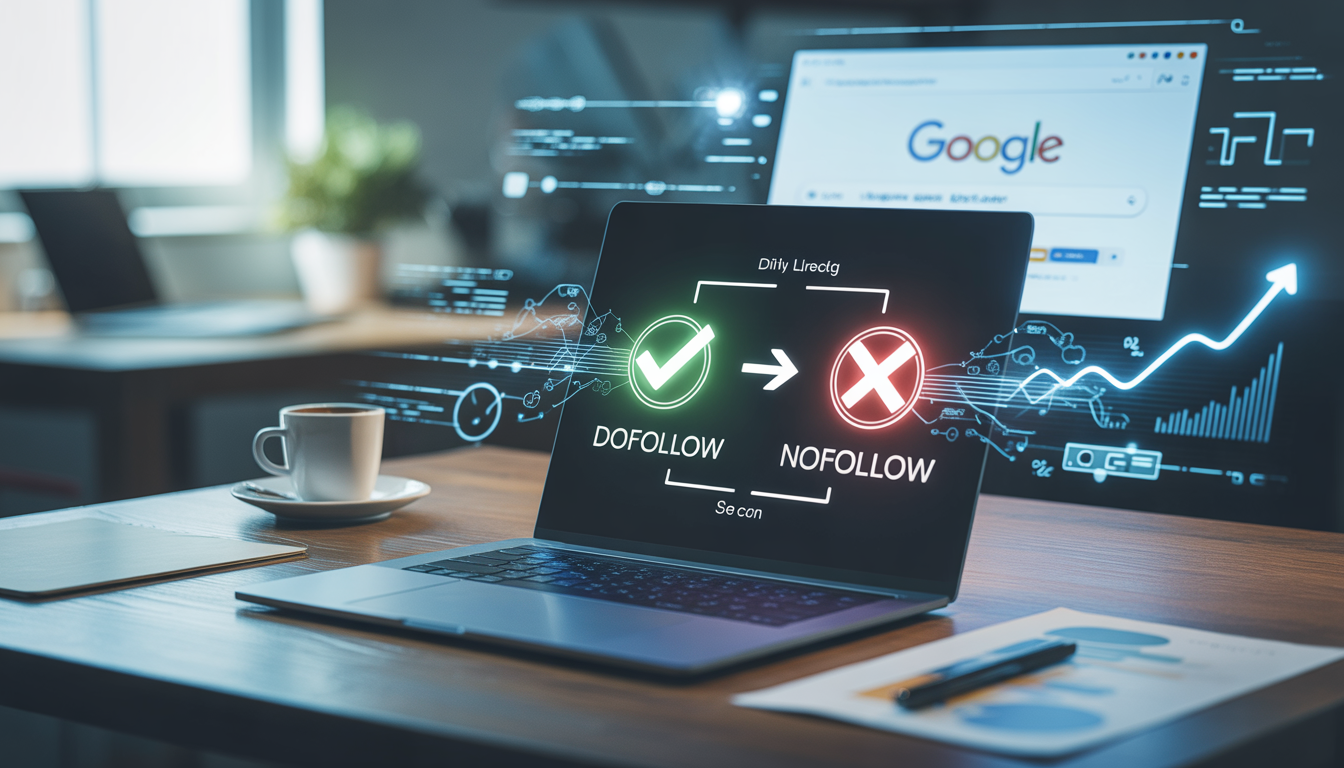
Dofollow vs Nofollow Backlinks: What Every Website Owner Should Know
If you’ve been trying to learn SEO for a while, you’ve probably heard people talk about backlinks. Some say you need “dofollow” links to rank high. Others say “nofollow” links are useless. I used to be confused too. After building websites and watching Google updates, I finally understood the real difference.
I’ll break it down in plain English. No complicated words. No gimmicks. Just the facts about how these two types of links work today, what Google actually says about them, and how you should think about both.
What Exactly Is a Backlink?
A backlink is simply a link from one website to another. Imagine you write a blog post about gardening, and a popular gardening magazine shares a link to your post. That’s a backlink.
Search engines like Google use backlinks as a signal. When lots of reputable sites link to you, Google thinks, “Hey, this site must be useful.” So it shows your pages higher in search results.
But here’s where it gets tricky: Not every link sends the same signal. Some links have “weight” that helps you rank. Others don’t. That’s where dofollow and nofollow come in.
Dofollow Links Explained Like You Are Five
A dofollow link is just a regular link. There’s no special code attached to it. When a website adds a standard link to your page, it’s dofollow by default.
What this link does: It passes “link juice,” a fancy term for ranking power. If a strong website links to you with a dofollow link, some of their trust goes to your site. Over time, this helps you climb Google.
Let me give you a real-life example. A few years ago, I wrote a guide to fixing common WordPress errors. A well-known SEO blog linked to my article with a simple, regular link. Within two weeks, my page had jumped from page three to the top of page one for several keywords. That was the power of a dofollow link from a trusted source.
Dofollow links are valuable. But they’re also hard to earn. You can’t just buy them from random marketplaces and expect good results. Google is smarter than that now.
Nofollow Links Explained Simply
A nofollow link is a small piece of code that tells Google: “Do not give this linked page any ranking credit.” The code looks like this: rel=”nofollow”
You see nofollow links all the time. Blog comments, forum posts, social media profiles, and Wikipedia links are usually nofollow. Even some sponsored content articles use nofollow or sponsored attributes.
This is something I learned the hard way. When I first started SEO, I completely ignored nofollow links. I thought they were useless. But I was wrong.
Nofollow links don’t directly boost your rankings. However, they still send real human visitors to your site. A single nofollow link from a popular Facebook group or busy forum can bring in dozens of clicks. Those people might share your content, sign up for your email list, or buy your product.
Additionally, Google has changed its rules. Back in 2019, Google announced that nofollow links act as “hints” rather than strict guidelines. This means that Google can still crawl nofollow links and discover new pages on your site. So nofollow links are no longer completely ignored.
The Two Other Attributes You Must Know
In 2019, Google added two more link types to give publishers more control.
Sponsored links use the rel=”sponsored” attribute. You should include this in any link that is part of an ad, paid placement, or sponsored post. If someone paid you to include the link, mark it as sponsored.
UGC links use rel=”ugc”, which stands for user-generated content. This is for forum posts, blog comments, and any other links added by users, not the website owner.
You can also combine attributes. For example, rel=”ugc nofollow” or rel=”sponsored nofollow” works just fine.
These attributes help Google understand the nature of your links. And Google trusts your website more when you are honest about your links.
What Google Actually Says About Links (The 2026 Reality)
Google’s official guidelines are called Search Essentials. They are not optional. If you break these rules, your site may be removed from search results.
Here is what Google clearly prohibits:
- Buying or selling links that pass PageRank (the algorithm Google used to measure link value)
- Excessive link exchanges like “you link to me, I link to you”
- Automated programs that create backlinks
- Private blog networks (PBNs), these are fake websites made just for linking
- Low-quality guest post farms
Google’s spam brain system is now very good at catching these tricks. The March 2026 spam update reinforced these policies. Many websites lost rankings overnight because they built unnatural backlinks.
So what does Google want? They want editorial, natural links. A link that exists because a real person found your content genuinely helpful. Not because you paid for it or traded it.
Why You Actually Need Both Types of Links
Here’s a mistake I see all the time. People are obsessed with getting only dofollow links. They reject every nofollow opportunity. It’s unnatural.
Think of any popular website you like. Check their backlink profile using a free tool. You’ll see a mix of dofollow and nofollow links. Why? Because real websites get links from many places – blog comments, social shares, forum discussions, and news mentions.
If your profile is 95% dofollow links, Google thinks something is wrong. It looks like you’re rigging the system. A healthy mix – maybe 60% dofollow and 40% nofollow – looks much more natural.
Also, nofollow links build your brand. A mention on a major news site may be nofollow, but millions of people see your name. That builds trust. And trust leads to more organic dofollow links later.
How to Build Links That Google Will Love
Forget shortcuts. This is what works today.
First, make something linkable. Original research, step-by-step guides, free tools, or honest case studies. No one wants to link to it when you publish shallow content. When you publish something truly helpful, links come naturally over time.
Second, reach out to real people. Find bloggers, journalists, or small business owners who have written about topics relevant to you. Send them a polite, personal email. Tell them why your resource will add value to their readers. Don’t ask for a direct link, just share your work.
Third, consider guest posting on reputable websites. But be careful. Many “guest posting services” are just link farms. Quality guest posts are on sites with real readers, real editors, and real traffic. One good guest post on a reputable site is worth more than fifty bad posts.
There are professional services that follow these principles. For example, GP Publisher helps businesses place specific, relevant guest posts through manual outreach. The website GPPublisher.online focuses solely on white hat methods. They don’t use PBNs, automation, or spam. This is the partner you want if you’re outsourcing link building.
But even if you do it yourself, remember the golden rule: always provide value first. Links are an outcome, not a goal.
Common Myths That Still Confuse People
Myth 1: Nofollow links are completely useless.
Not true. They bring traffic, brand exposure, and help your link profile look natural. Google can also use them for discovery.
Myth 2: You can buy dofollow links if nobody finds out.
Google’s spam brain is very good at detecting paid links. Many sellers promise “safe” links, but they often use dangerous networks that get deindexed.
Myth 3: All nofollow links are the same.
No, a nofollow link from a major news site is much more valuable than an nofollow link from a random spam blog. The traffic and trust are still real.
Myth 4: Google penalizes websites with too many nofollow links.
False. Google doesn’t penalize you for receiving nofollow links. They may ignore them for ranking purposes. This is not a penalty.
Simple Steps to Check Your Own Links
You don’t need expensive tools. Go to Google Search Console. Click “Links” in the left menu. You’ll see who links to your site. The report doesn’t always show every link, but it gives you a good starting point.
You can also use free tools like Bing Webmaster Tools or Ahrefs’ free backlink checker. Look at the ratio of dofollow to nofollow. If you see hundreds of links from low-quality sites, that’s a red flag. If you see a healthy mix from genuine websites, you’re doing okay.
Actionable Advice for Regular Website Owners
Don’t waste time chasing just dofollow links. Build relationships instead of links. Write guest posts for a real audience, not for SEO juice. Engage in communities where your expertise helps people. Share your content on social media and forums.
When you outsource, choose partners who are transparent. Ask them how they get links. If they promise a set number of dofollow links per month for a very low price, run away. It takes time and money to build quality links because real people are reaching out.
GP Publisher, for example, charges based on the quality of the placement, not the quantity of links. That’s a good sign. They focus on editorial relevance and manual work. That’s what Google wants.
But even if you never hire anyone, you can still be successful. Write helpful content. Let people know about it naturally. Good links will come over time. Both dofollow and nofollow. And your website will grow properly.
Final Thoughts
Dofollow and nofollow links are not enemies. They are teammates. Dofollow links build your authority in Google’s eyes. Nofollow links build your audience and trust. You need both for a healthy website.
Google’s rules are clear: Don’t manipulate links. Don’t buy and sell links without proper attribution. Don’t use spammy networks. Instead, focus on getting links through real value.
The best SEO strategy hasn’t changed over the years. Create something useful. Share it honestly. Be patient. And understand that every link, whether dofollow or nofollow, is a real person saying, “This is worth looking at.”
This is the only signal Google ultimately wants to see.
Leave a Reply to High Quality Backlinks: What I Learned After 200+ Failures Cancel reply