What Is Link Building? (A Straightforward Guide for Real People)
If you’ve spent any time around SEO, you’ve probably heard someone talk about “link building” in a very serious tone. Maybe they made it sound like rocket science. Or maybe they made it sound a little shady. The truth is somewhere in between.
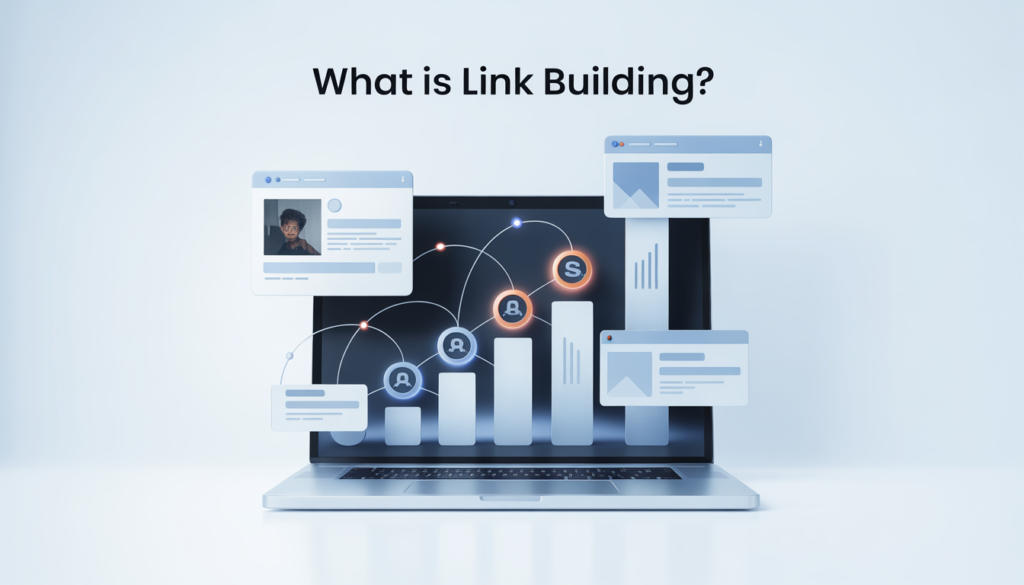
Link building is simply the process of getting other websites to link to your website on one of their pages. That’s it. Nothing magical.
But here’s where things get interesting. Google treats these links like votes. If a trusted website links to you, Google thinks “Oh, these people know what they’re talking about.” And then it shows your site higher in search results.
However, and this is a big however, not all votes are created equal. A link from a random blog that no one reads isn’t very helpful. A link from a major news site or industry authority? That could change everything for your business.
So why am I writing about it today? Because I still see smart business owners waste money on terrible link building schemes. They buy fifty links for a hundred dollars and wonder why their site gets penalized six months later. Let me save you from that mistake.
Why Link Building Still Matters in 2026
Before we get into the how, let’s talk about the why. Google has gotten smarter. It can understand content better than ever before. But one thing hasn’t changed: backlinks are one of the top three ranking factors.
Think about it this way. If you’re Google, how do you know which pages are really the best? Sure, you can read words. But anyone can write words. Links act as a reputation system. When someone links to you, they’re building their reputation a little bit. They’re saying, “This is worth your time.”
That’s powerful.
GP Publisher has seen this play out hundreds of times with clients. A website with solid, relevant backlinks will almost always outperform a website with great content but zero links. It’s not fair, but it’s the reality of how search engines work.
The good news? You don’t need thousands of links. In most local or niche markets, twenty to thirty really good links can take you from page three to page one.
What Google Actually Says About Links (Read This Carefully)
I’m going to quote from memory here, but Google’s guidelines are pretty clear. They want links to be editorial. That means someone gave you that link because they wanted to, not because you paid them, did business with them, or tricked them.
Here is what Google explicitly calls “link spam”:
- Buying or selling links that pass authority. This is the big one. If money changes hands and the link is meant to manipulate rankings, you are breaking the rules.
- Excessive link exchanges. “You link to my page about dogs, I will link to your page about cats.” Doing this once or twice is fine. Doing it fifty times is a pattern Google notices.
- Automated link building. Any software that creates links without human review is asking for trouble.
- Link networks. Groups of websites that all link to each other for the sole purpose of boosting rankings.
GP Publisher always tells clients the same thing: If you think you’re “getting away with something,” you probably are. And Google will eventually catch on.
But here’s the part that confuses many people. Google doesn’t hate links. Google hates fake links. There’s a big difference.
The Right Way to Build Links (Based on Real Experience)
I’ve been doing this for a decade. I’ve tried almost every link building method you can imagine. Some worked for a while and then stopped. Others got their sites penalized. A small handful have worked consistently the entire time.
Let me tell you what actually works in 2026.
Start With Something Worth Linking To
It seems obvious, but you’d be surprised how many people skip this step. They build links to a thin, boring page and then wonder why nothing happens.
Before you ask someone for a link, take a hard look at your content. Is it better than what’s already ranking? Does it answer the questions people are actually asking? Does it include real data, screenshots, examples, or insights that no one can find anywhere else?
If your content is average, your results will be average. It’s as simple as that.
GP Publisher recommends spending at least as much time on content quality as you do on outreach. A great piece of content will naturally attract links over time. I’ve seen blog posts get hundreds of links without a single outreach email. This is only true if the content is genuinely useful.
Guest Posting (The Right Way)
Guest posting has a bad reputation because so many people do it badly. They write low-quality articles, stuff them with links, and publish them on any site that says yes.
That’s not guest posting. That’s link spam.
Real guest posting is when you write a genuinely helpful article for a website that reaches your target audience. You add a link or two to your site, but only where they add value to the reader. You don’t do it fifty times a month. You do it five times a year, but you put real effort into it each time.
GP Publisher helps clients find legitimate guest posting opportunities through GPPublisher.online. The focus is always on relevance and quality. One guest post on a reputable industry blog is worth more than fifty posts on junk directories.
Broken Link Building (Still Underrated)
Here’s a tactic that’s never talked about, but it works beautifully.
Find a resource page in your industry. Use a tool like Ahrefs or even a simple Chrome extension to check for broken links on that page. When you find a dead link, contact the website owner. Tell them, “Hey, I noticed that link is broken. I have a similar resource that’s up to date. Would you consider changing it?”
You’re helping them solve a problem. They almost always say yes. And you get a quality link from a page that was already getting traffic.
Digital PR and Brand Mentions
It’s gotten a lot bigger in the last couple of years. Google is getting better at recognizing brand mentions even when there’s no link.
Let me explain. If a major publication mentions your company name but doesn’t link to you, that mention still signals trust. Google’s systems can connect the dots. Over time, that mention can help you rank even without a clickable link.
So don’t just obsess over links. Focus on getting your brand name out there. Mentions, reviews, interviews, and references are all included.
Common Mistakes That Will Get You Penalized
I have seen too many business owners fall into these traps. Please learn from their mistakes.
Buying links from Fiverr or similar marketplaces. Those cheap links come from private blog networks (PBNs). Google has been hunting these for years. One manual penalty can wipe out all your traffic overnight.
Using exact match anchor text too often. If half your backlinks say “best SEO services New York,” that looks unnatural. Real websites link with your brand name, or with generic phrases like “click here” or “this article.”
Building too many links too fast. If your site had ten links last month and five hundred this month, Google notices. That kind of spike almost never happens naturally.
Ignoring irrelevant links. A link from a gambling site to your accounting firm does not help. It hurts. Disavow those links if you cannot remove them.
GP Publisher always advises clients to think long term. A slow, steady stream of quality links over two years will outperform a rush of five hundred links in two months. Every single time.
How to Know If Your Link Building Is Working
You can’t just build links and hope for the best. You need to track the right signals.
Look at your organic traffic trends. Not day by day, but month by month. A healthy link building campaign should show consistent growth over time.
Look at your keyword rankings for the specific pages you’re linking to. If you’re doing everything right, those pages should slowly climb the search results.
Look at your referral traffic. Are people actually clicking on those links? If so, you’re building links on sites your audience visits. That’s a huge sign.
And here’s a less obvious one. Look at your branded search volume. Are more people typing your company name directly into Google? This often means that your link building and PR efforts are increasing brand awareness.
A Few Final Thoughts Before You Start
Link building is not a one-time project. It’s an ongoing activity. The websites that win in search are the ones that consistently gain new, high-quality links over the years.
Don’t chase shortcuts. Don’t pay for links. Don’t automate outreach with spammy templates.
Instead, focus on building real relationships with other website owners in your industry. Write content that people actually want to share. Always help others without asking for anything in return.
GP Publisher has built its entire business around this philosophy. Through GPPublisher.online, the team provides guest posting, custom editing, and content writing services that follow Google’s guidelines to the letter. No shortcuts. No spam. Only real value delivered consistently.
If you take one thing away from this article, let it be this: link building is about earning trust, not manipulating the algorithm. When you focus on trust, rankings will naturally follow.
Now create something that is linkable.
[…] What Is Link Building? A Straightforward Guide for 2026 ←What Is Link Building? A Straightforward Guide for 2026 […]